

motherhood and parenting
Perinatal and parenting counselling
Pregnancy, birth and early parenthood can change the relationship you have with yourself, your body, your baby and the people around you.
You may be experiencing anxiety or depression, struggling to feel connected to your baby, grieving a pregnancy or infant loss, carrying the impact of a difficult or traumatic birth, or trying to understand who you are within motherhood. Your relationship with your partner may have changed too, particularly as you navigate intimacy, communication, caregiving and the demands of becoming parents together.
Perinatal counselling offers space to explore what is happening within you and within these relationships, including:
Pregnancy and the transition into motherhood
Postnatal anxiety and depression
Bonding and attachment with your baby
Birth trauma and difficult birth experiences
Miscarriage, pregnancy and infant loss
Identity and your relationship with yourself
Changes in intimacy and your relationship with your partner
Neurodivergence during pregnancy and parenthood
As we work together, you may begin to understand your emotions and responses differently, feel more connected to yourself and more confident communicating what you need. You may begin to feel safer and more present in your relationship with your baby, recognise patterns that are affecting your relationships, and find new ways of connecting with your partner and the people around you.
The goal isn’t to get back to who you were before. It’s to understand who you are now and build relationships that can grow with you through this new stage of your life.

Parent–Child Connection
The relationship between a parent and child is constantly developing. From the earliest relationship with a newborn through toddlerhood, childhood, adolescence and the teenage years, both you and your child continue to change.
Sometimes connection can feel easy. At other times, behaviour, big emotions, communication difficulties, different needs or changes within the family can leave you wondering what is happening between you and how to respond.
Parent–child counselling looks beyond behaviour alone. Together, we can explore what your child may be communicating through their behaviour, what happens within you when certain situations arise, and how both of your needs, nervous systems, temperaments and experiences influence what happens between you.
This may include:
Bonding and attachment from infancy through adolescence
Understanding behaviour as communication
Big emotions, meltdowns, shutdowns and regulation
Co-regulation and emotional safety
Communication and understanding each other's needs
Parenting triggers and protective responses
Boundaries, limits and maintaining connection
Neurodivergence and different sensory, emotional or communication needs
Changes or challenges within the parent–child relationship
Rupture, repair and reconnecting after difficult moments
Supporting connection as your child grows and their needs change
As we work together, you may begin to understand your child differently and feel more confident recognising what sits underneath their behaviour. You may also become more aware of your own responses, what activates you and the patterns you bring into the relationship.
Over time, this can create more room for communication, regulation and repair. Difficult moments can become easier to navigate, boundaries can feel clearer, and you and your child can develop ways of finding your way back to each other when connection becomes difficult.
The goal isn't a relationship without conflict or big emotions. It's a relationship where both of you can continue to grow, change and reconnect through them.
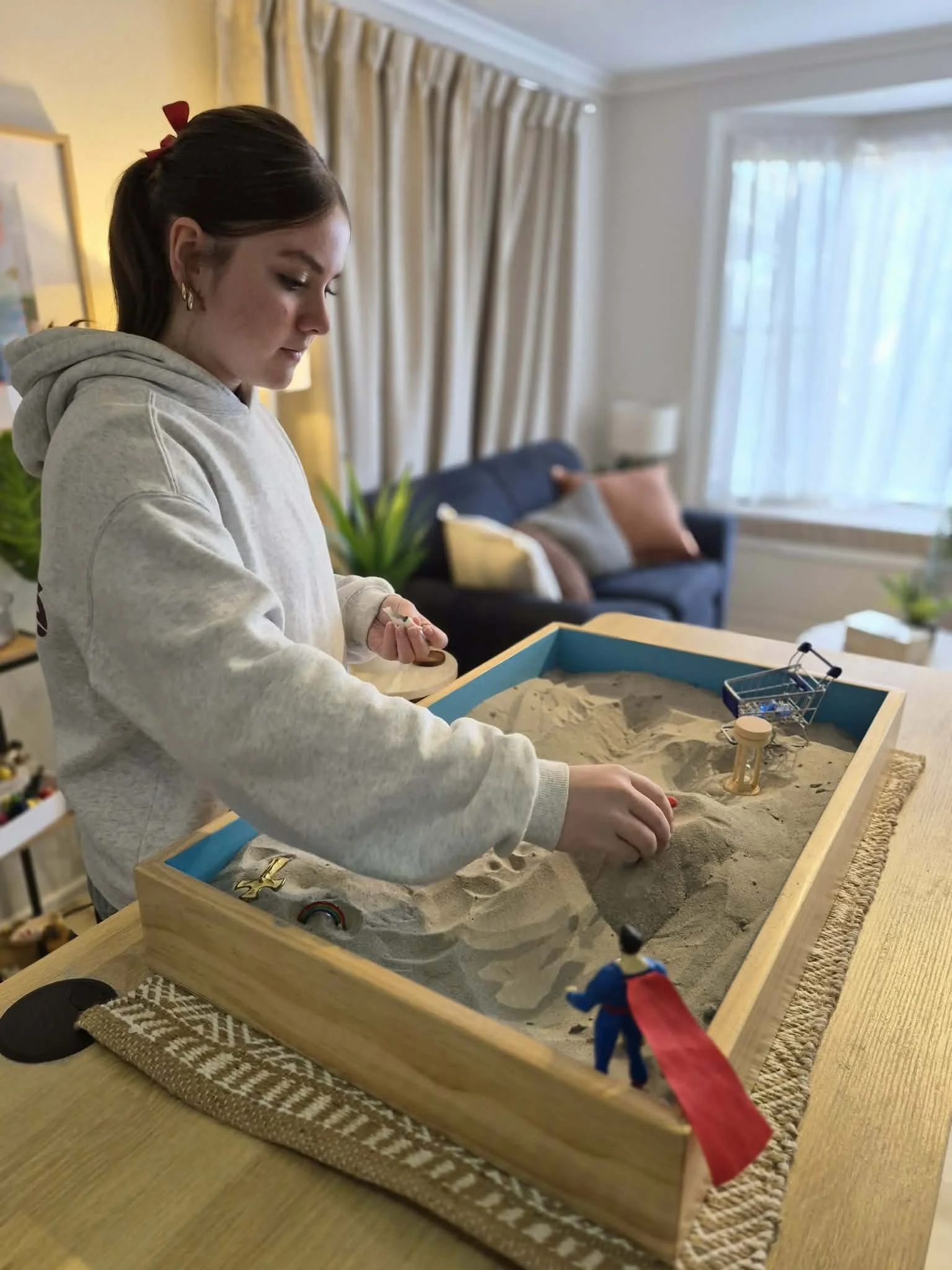
Counselling for Teenagers | 12+
The teenage years can bring a lot to navigate. Counselling can give teenagers a space to explore what is happening for them, understand themselves more deeply and find ways to communicate experiences that can sometimes be difficult to put into words.
Things I might work with your teenager on include:
Anxiety, overwhelm and big emotions
ADHD, autism and understanding neurodivergence
Emotional regulation and sensory needs
Identity, self-worth and confidence
Feeling different, misunderstood or like they don't belong
Friendships, relationships and social challenges
Parent–teen and family relationships
School stress, school avoidance or school refusal
Grief, loss and significant life changes
Trauma and difficult life experiences
Boundaries, communication and expressing needs
Understanding patterns, reactions and triggers
Sexual health, relationships and identity
Counselling doesn't have to mean sitting and talking for an hour. Art, sandtray, creative activities and expressive approaches are available in sessions, giving teenagers different ways to explore and communicate what is happening for them.
My work with teenagers is neuroaffirming, attachment-focused and trauma-informed. Parents and caregivers are also part of the process, while still giving the teenager a space where they can build trust, develop their own voice and feel heard.